WAS MADISON RIGHT?
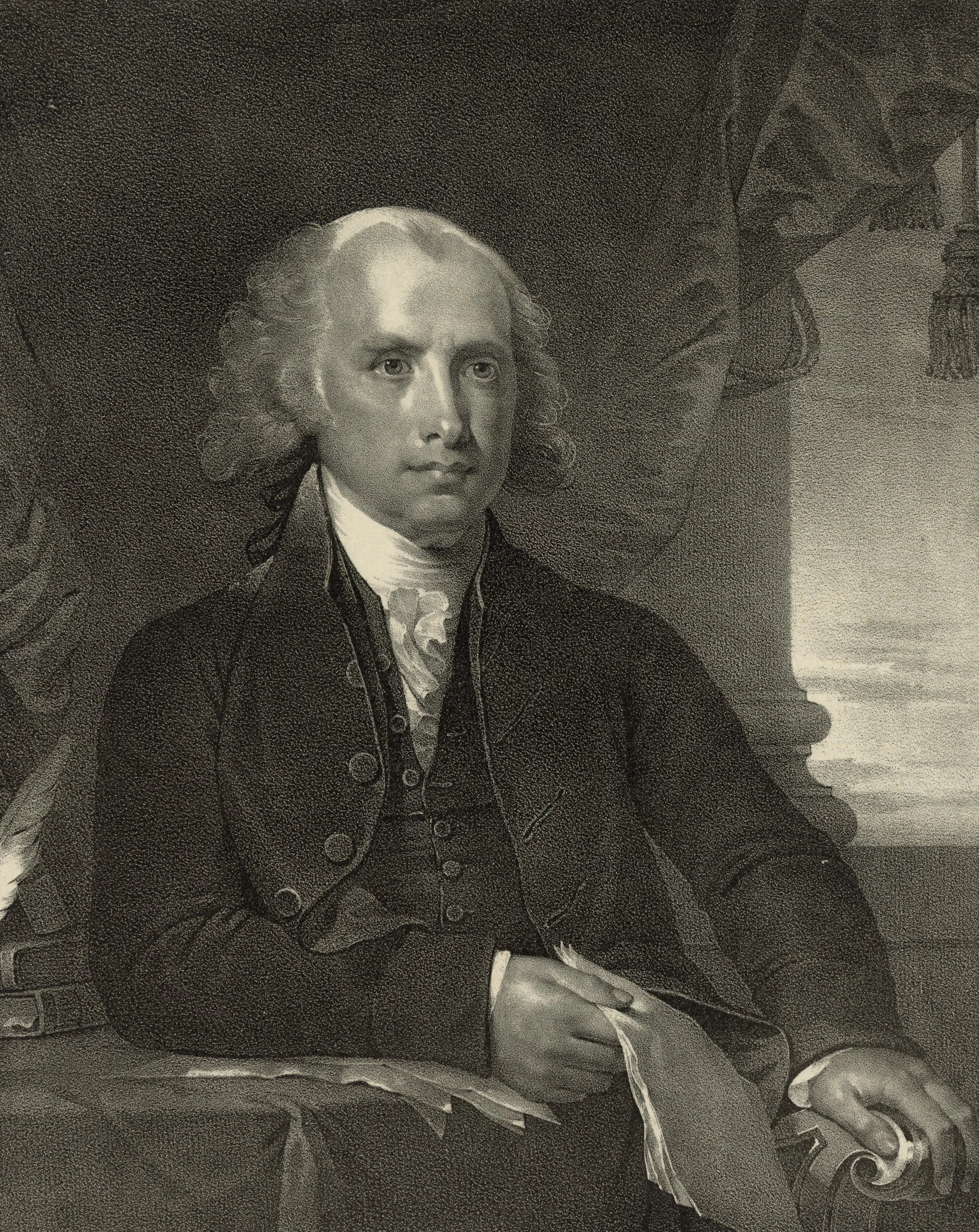
All human authority arises from the absolute authority of God. For a human authority to be legitimate God has arranged certain checks and balances for it is the bent of sinful humanity to abuse power and never relinquish it. Thus power given to any man or any body politic must come directly from God, as in the case of Moses, from His apostolic emissaries, the apostles, or according to the will of the people being ruled. The history of the world has shown that where men take control apart from the will of the governed, tyranny and oppression follow closely behind. The reason that Britain and America have thrived can be attributed in part to their low view of human goodness and binding social contract whereby those who govern are limited in their authority by law. James Madison, for example, the prime architect of our Constitution was suspicious of human integrity and made sure that the newly found government prevented any individual from holding autonomous. What came from that conviction were the three branches of government each of which closely checked the power of the other two. In Britain it was the thirteenth century signing of the Magna Carta that catapulted that tiny island into prosperous nation. Many other nations have in some form or another adopted a government which divides authority among competing forces. In almost every case this leads to prosperity and the expansion of human liberty. James Madison, the prime author of the American Constitution and who studied a spell at Princeton Seminary, knew the basic depravity and self-interest of man. About this new American government he wrote in Federalist 51, “The constant aim is to divide and arrange the several offices in such a manner as that each may be a check on the other, that the private interest of every individual may be a sentinel over the public rights.”
Sadly the church has lagged behind in adopting this kind of government. Whether it be Roman Catholicism with its sovereign rule of the Pope or Protestantism with its concept of an autonomous eldership, many churches vouchsafe far too much authority into the hands of a few. The rationale seems to be that this was the way the early church operated. Rulers or elders were installed under apostolic authority and these leaders held autocratic power. As in so many areas, however, the ecclesiastical structures from the book of Acts are not to be woodenly applied to a post-Apostolic church. We no longer have apostles, men divinely installed by God to guide the church in its infancy. This means there are no leaders in churches today who trace their right to rule to the apostles. What is left is a broader wisdom given to believers by the Holy Spirit that enables them through various means to elect leaders from their own number. These men are given specific roles along with limited authority and are never to rule over the people of God as if they alone have a direct anointing of God. When Jeremiah said that “all men shall know me from the least to the greatest” or when the apostle John said, “But the anointing which you have received from Him abides in you, and you do not need that anyone teach you; but as the same anointing teaches you concerning all things, and is true, and is not a lie, and just as it has taught you, you will abide in Him,” these inspired writers were laying the groundwork for a New Covenant leadership paradigm that granted no ultimate authority to any one faction but gave the ultimate authority to the Spirit-filled church who as a whole in turn chose leaders. Such it was when the seven men were chosen to serve tables in the early church, men who were of “good reputation, full of the Holy Spirit and wisdom” (Acts 6:3). There was no thought that these men were being given an autonomous authority over other believers. Rather they were anointed to be servants of the body, a simple truth that many leaders forget. Giving authority to a Spirit filled body can be messy work. Dividing authority so that no one group holds the majority of power can often seem chaotic. Through this seemingly messy system the Spirit will bring order out of chaos, as He did at Creation. The bottom line is that both scripture and natural law show us that a division of authority is the safest guardrail to protect potential leaders from yielding to the basic desire to lord it over others and protects the sheep from spiritual abuse, intended or not. The church will always be an autocracy ruled by Christ, but that authority is to be divided among spiritual men who lead in a capacity of servants. This paradigm in no wise eliminates leaders. What it does do is eliminate the temptation that is inherent in vesting all the authority in a few. How a church should implement this model is left to the corporate wisdom of the body under the superintendence of the Holy Spirit’s will through prayer. To be sure, this, or any other church structure, will run into failures and snags because men are still sinners and act out of self-interest no matter what the structure they operate in. But we must never forget that allowing disagreements among the constituents and seeking a multitude of counselors in decision-making are the best ways to mitigate the potential for oppressive rule. There is a risk in dividing power. Where authority is spread around, things never get done as efficiently and quickly as in an autocratic system. But as is often true with many biblical truths, what at first seems to be counterintuitive, even messy, is often the very thing that prevents a greater evil. In church leadership, as in everything else, God has the full picture in view and He often allows minor inconveniences to occur so that the greater good can be achieved. Dividing among many may limit efficiency but it will also limit potential spiritual abuse. And that is a tradeoff that so many today who will not darken the door of a church because of authoritarian abuse are willing to take. Maybe our founding fathers could teach us something.